Form and motion,
re-imagined.

Turn your phone into an AI biomechanics lab.

Stand still, and Llyr reads how you're stacked. Start moving, and it follows your body the whole way through, draws where the joint should have been, and tells you what to fix in plain words. If it can't see part of you, it says so instead of guessing.

One phone, propped at the side Nothing to strap on Reads you as you move Analysis runs on the phone
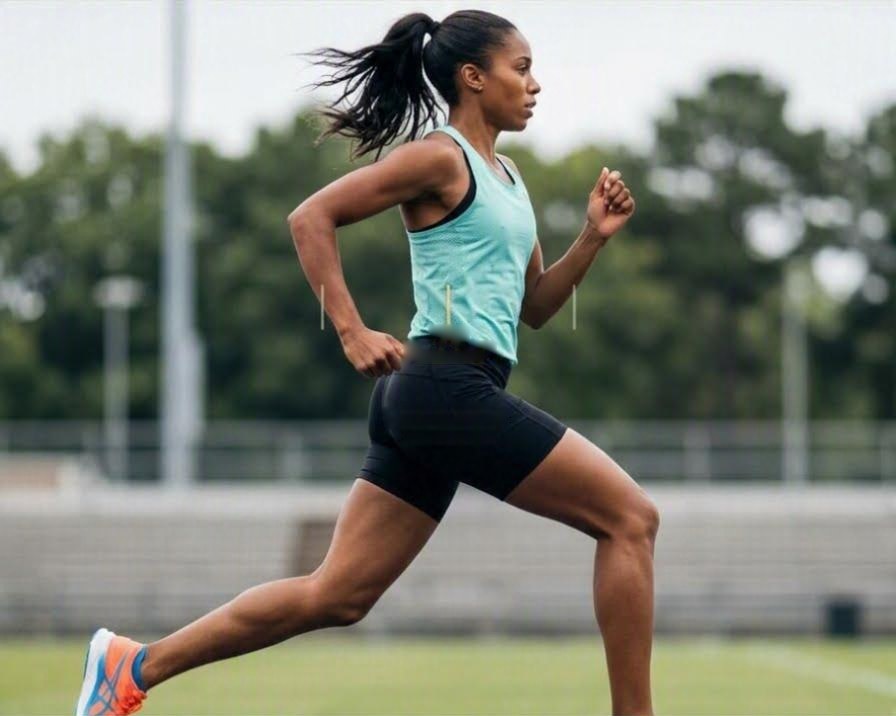
A runner filmed from the side, mid-stride, with Llyr's reading of her body drawn on top: her joints marked and joined, her elbow at 58 degrees and her leading knee at 122 degrees, a dashed line showing where the technique model puts the forearm, and a hatched block at the bottom of the frame where her leading foot is out of shot. A runner filmed from the side with Llyr's skeleton drawn on her: solid lines for the joints the camera found, a dashed line for the technique model's arm position, and a hatched block where her leading foot left the frame. MODEL 58° 122°
Solid is what her body actually did. Dashed is where the model would have put it. Hatched is her front foot, out of shot. Llyr writes nothing there.
Built for Swim Bike Run Golf More sports are being built

Your watch can't see you.

Your watch counts. Your scorecard counts. Neither one has any idea what your body was doing while it counted.

And unless someone is filming you, neither do you. You can feel that something is off. You just can't tell what, or when.

One video. A short list of fixes.

You see it for yourself. It's drawn on your own video, on your own body — your elbow, at the exact moment it drops. Not a write-up about you.

You're told what to do about it. In normal words. “Keep your elbow higher through the pull.” Not a page of numbers to work out for yourself.

You find out whether it stuck. Film again next week. Llyr only speaks up about something it has seen more than once, so you're working on a habit instead of arguing with one bad video.

Two ways to read a body.

Held still, your body says one thing. Moving, it says something else entirely. Llyr reads both, and it reads them differently.

Stand still

Posture analysis

You hold your body in some shape for sixteen hours a day. That shape is where the nagging, one-sided, never-quite-goes-away trouble gets written — and you have never once seen it from the outside.

  • How you stack. Head over ribs, ribs over hips, hips over feet — and where your weight actually sits over your base.
  • Side against side. Which shoulder rides higher, which hip carries you, which way your head habitually tilts.
  • The curves. The line your spine holds standing, sitting and lying down.
  • What you hold all day. The tone you keep against gravity without ever deciding to.
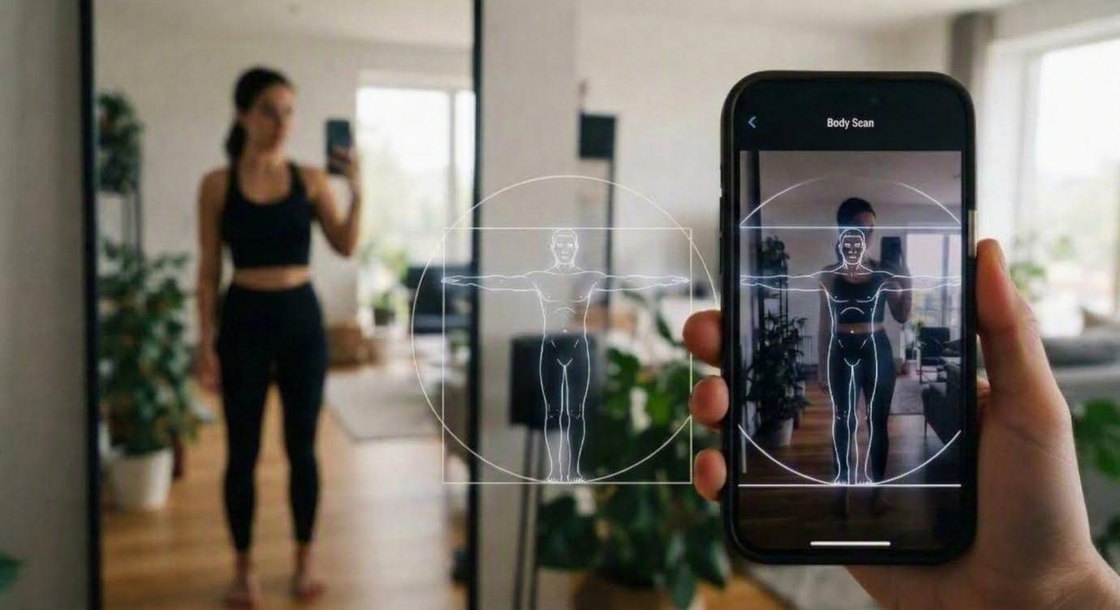
An illustration of the body-scan idea: someone stands in front of a mirror while the phone in their hand traces a body outline over the camera view.
Illustration Llyr measures you once before your first session, so it's reading your body and not an average one. This picture is a drawing of that idea, not a screen from the app.

See the posture read

Now move

Form analysis

Then you move, and that shape changes hundreds of times a minute. Llyr follows it the whole way through — the stroke, the pedal, the stride, the swing, the lift.

  • The whole arc. Joint by joint, through the full range of the movement — not just the frame you thought felt wrong.
  • Timing. What fires early, what fires late, and what arrives out of order.
  • Coordination. How one segment hands the movement on to the next one.
  • What repeats. A fault has to turn up more than once before Llyr says a word about it.
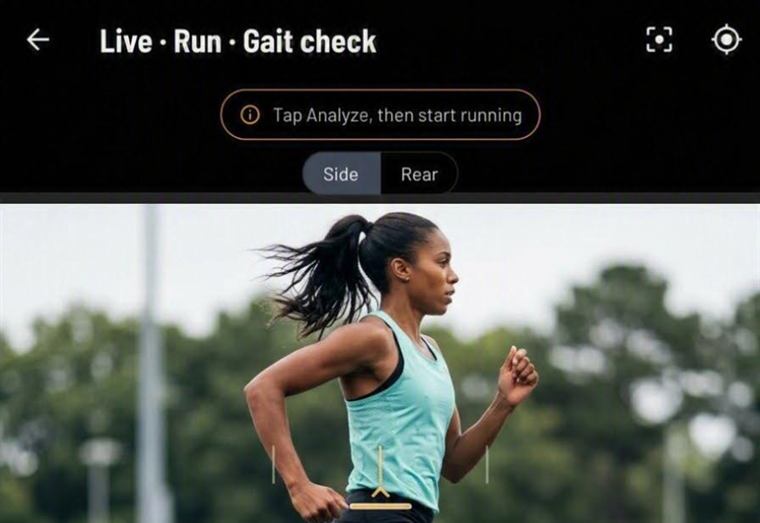
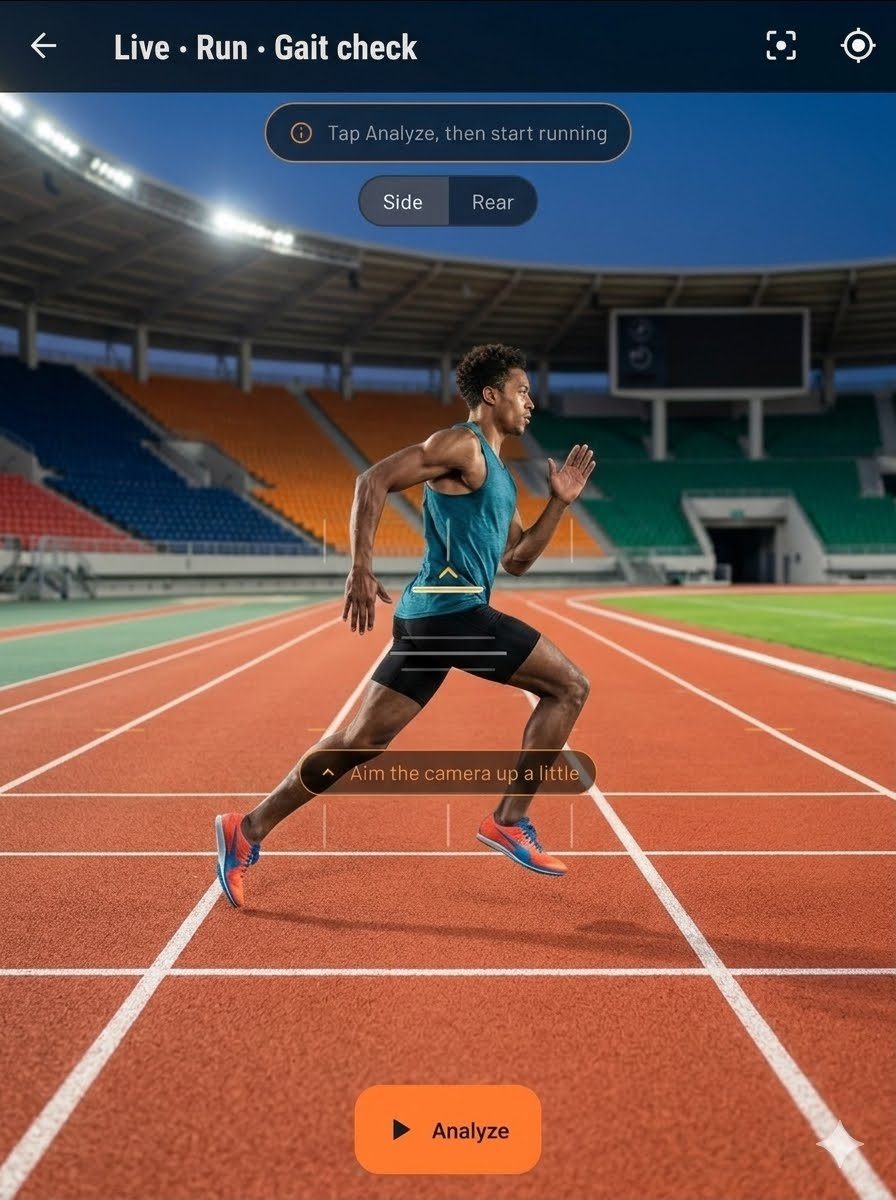
Llyr's run analysis screen: a runner filmed side-on with joint angles drawn on the stride and a plain-language correction listed underneath.

See it on your sport

Film it. Read it. Fix it.

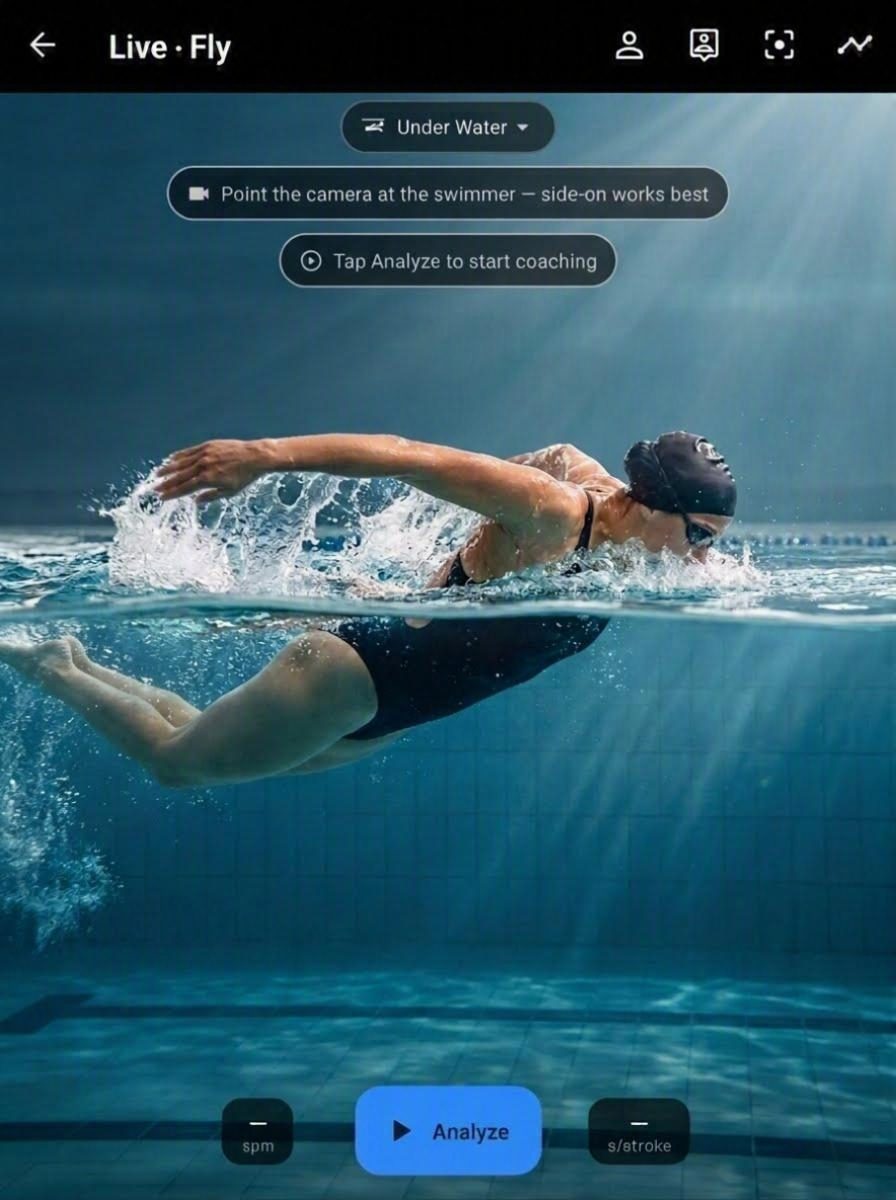
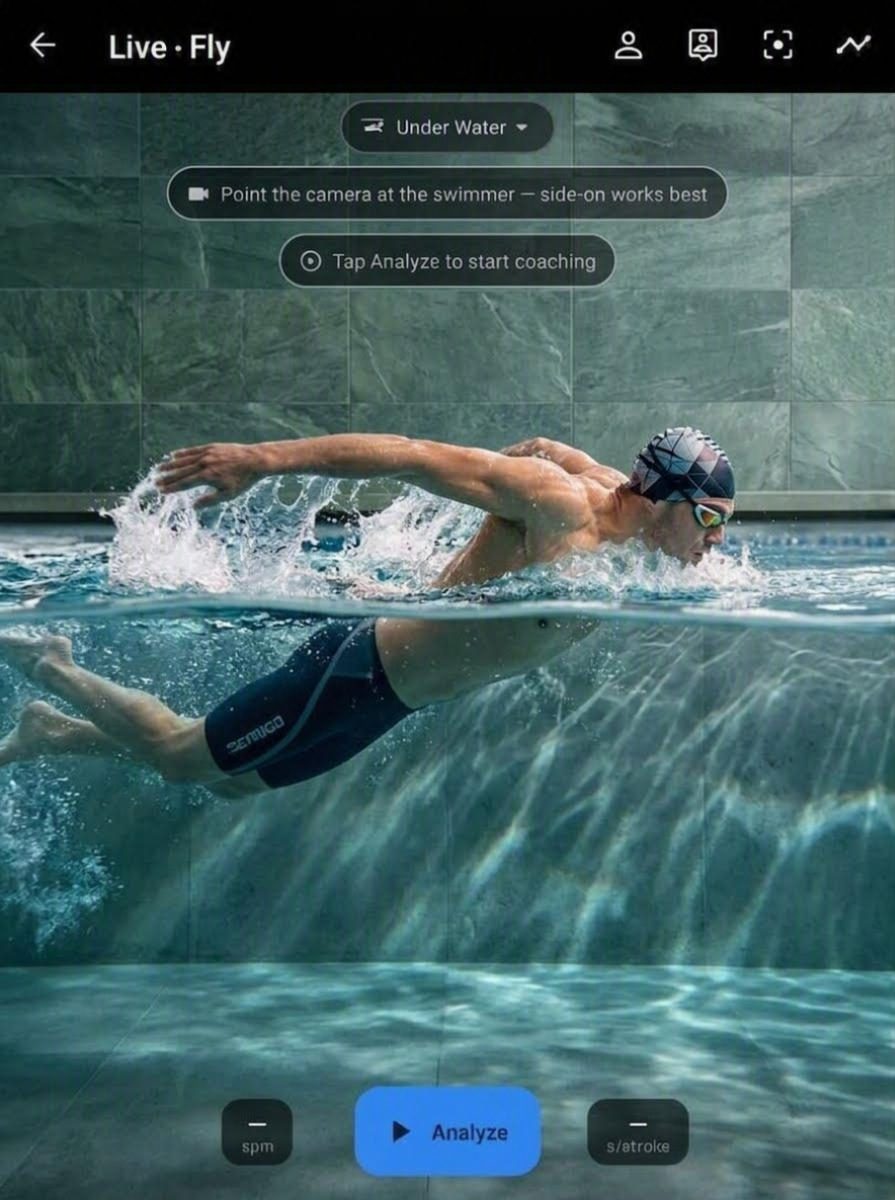
Llyr's live swim screen. A swimmer is framed side-on through the surface, with an Under Water toggle, a hint reading “point the camera at the swimmer” and a centred Analyze button.

01 Film it

Lean your phone against something, side-on to you, and hit record. One angle is all it wants. The video never leaves your phone.

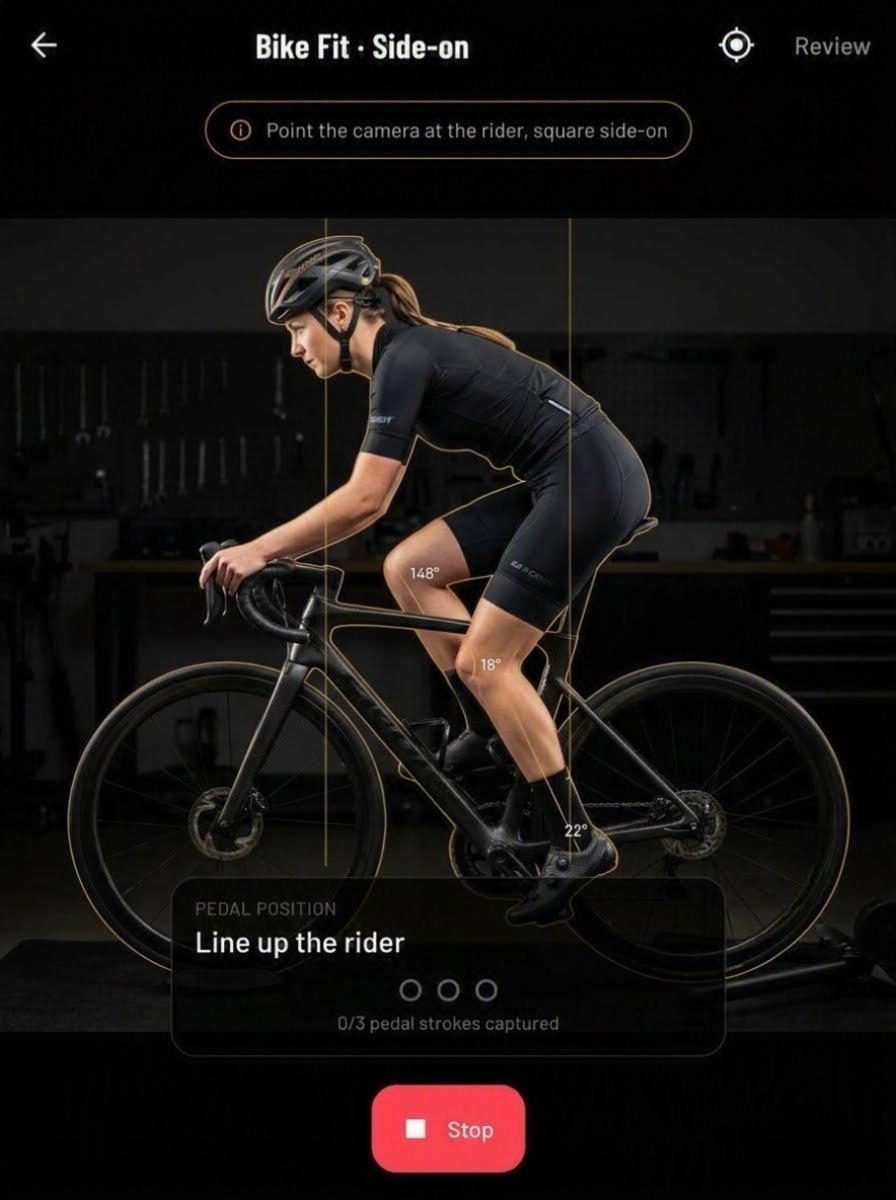
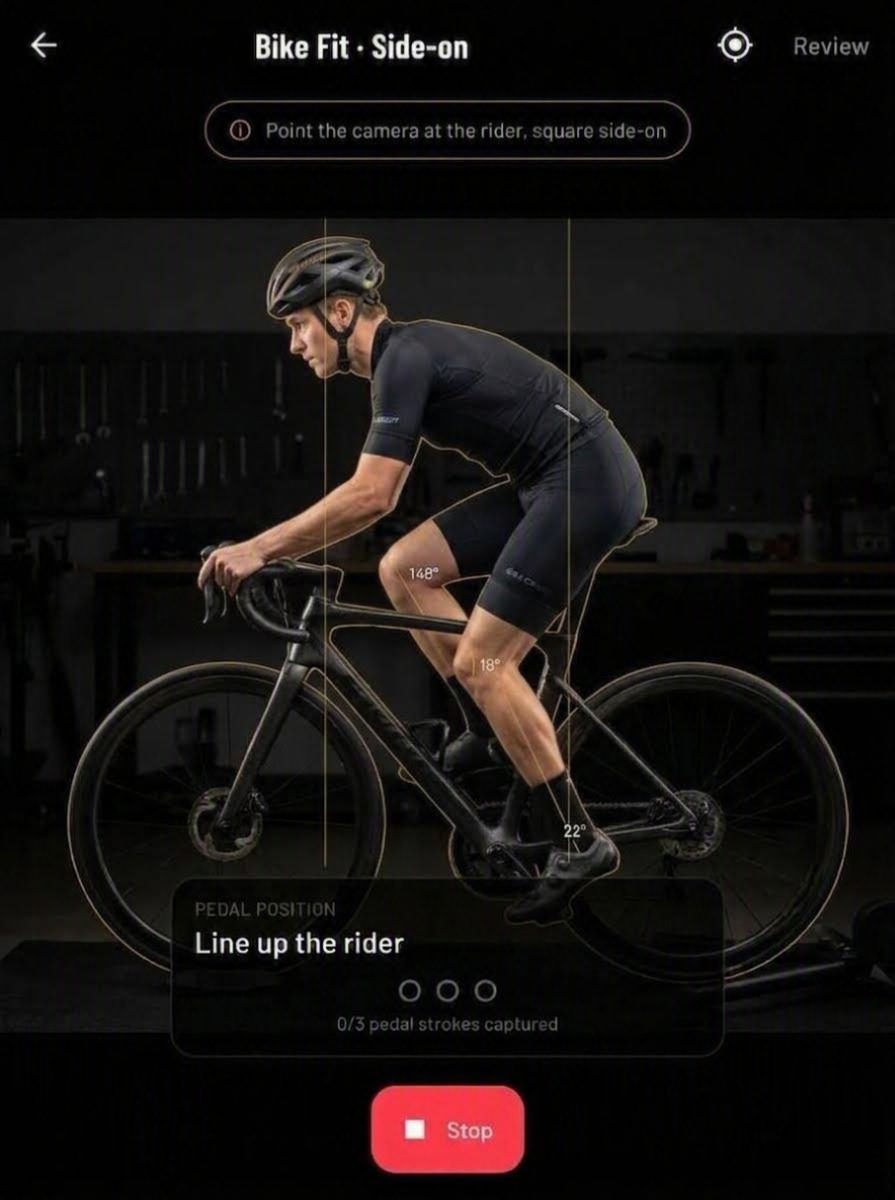
Llyr's bike fit screen. Hip, knee and ankle angles are drawn on a rider filmed square side-on, with a counter showing how many pedal strokes have been captured.

02 It finds your joints

Shoulder, elbow, hip, knee, ankle — followed through every frame, not just the moment you thought felt wrong.

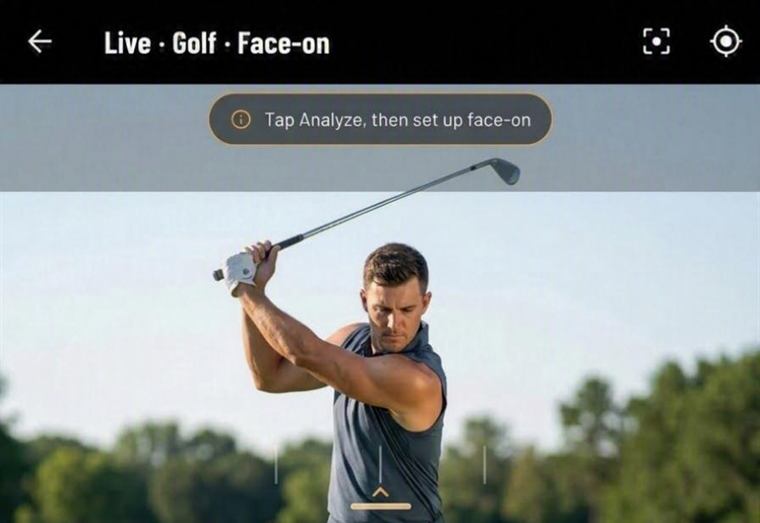
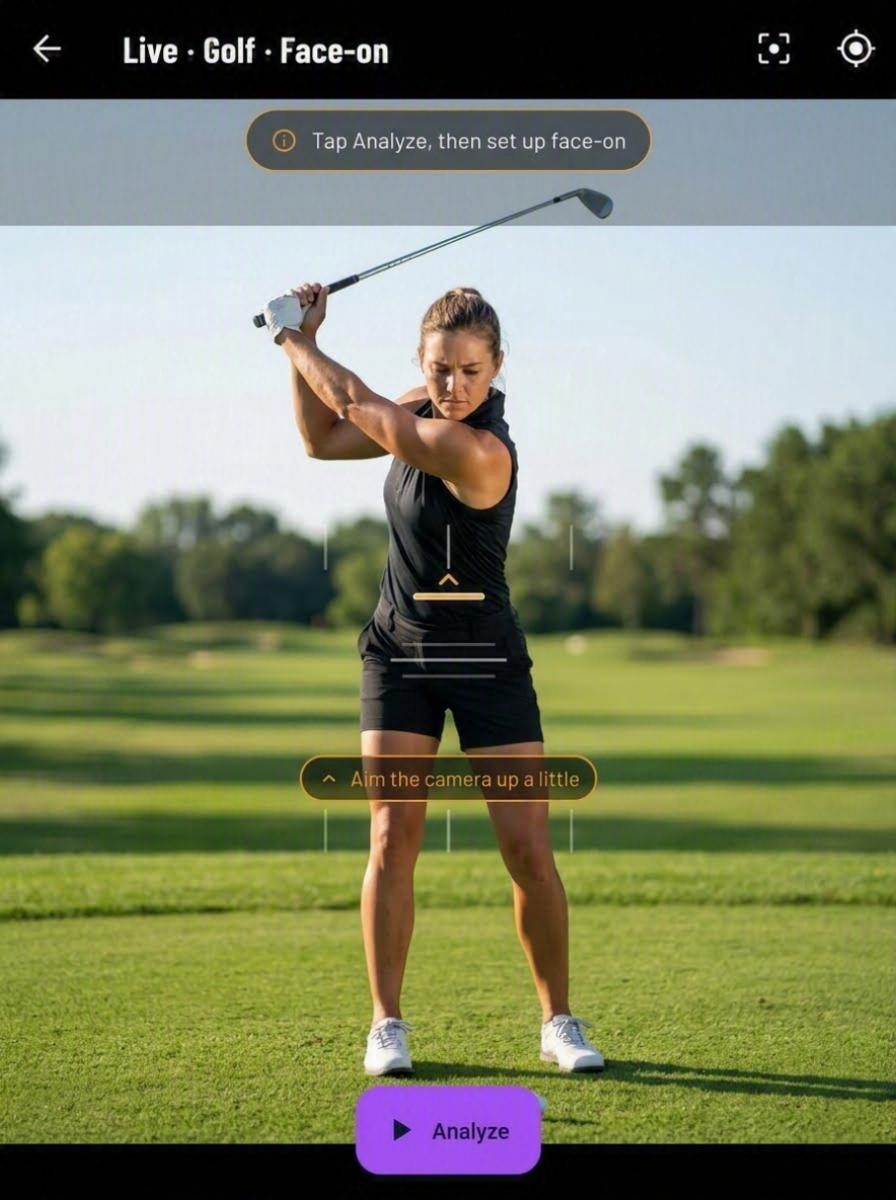
Llyr's live golf screen. A plain-language cue reading “tap Analyze, then set up face-on” sits over a golfer filmed face-on at the top of the backswing.

03 It tells you what to fix

Plain instructions, marked on the frame where it happened. Where the camera couldn't see, it leaves the space empty rather than filling it in.

No sensors, no wearables Analysis runs on your phone Says when it can't see

When it can't see, it says so.

Llyr holds your form against a written technique standard — the same one, every video, for everybody. It isn't one coach's opinion, and it doesn't change its mind on a bad day.

But one camera only ever sees one side of you. When your own body is in the way, Llyr leaves that line blank. It would rather tell you nothing than tell you something it can't see.

Can see

Your elbow as you pull Nothing is in front of it, so Llyr has it in every frame.

Can see

Your hip and knee as you pedal Filmed side-on, both stay in clear view the whole way round.

Can't see

Your far shoulder Your own chest is in front of it. So Llyr writes nothing here.

Pick your sport.

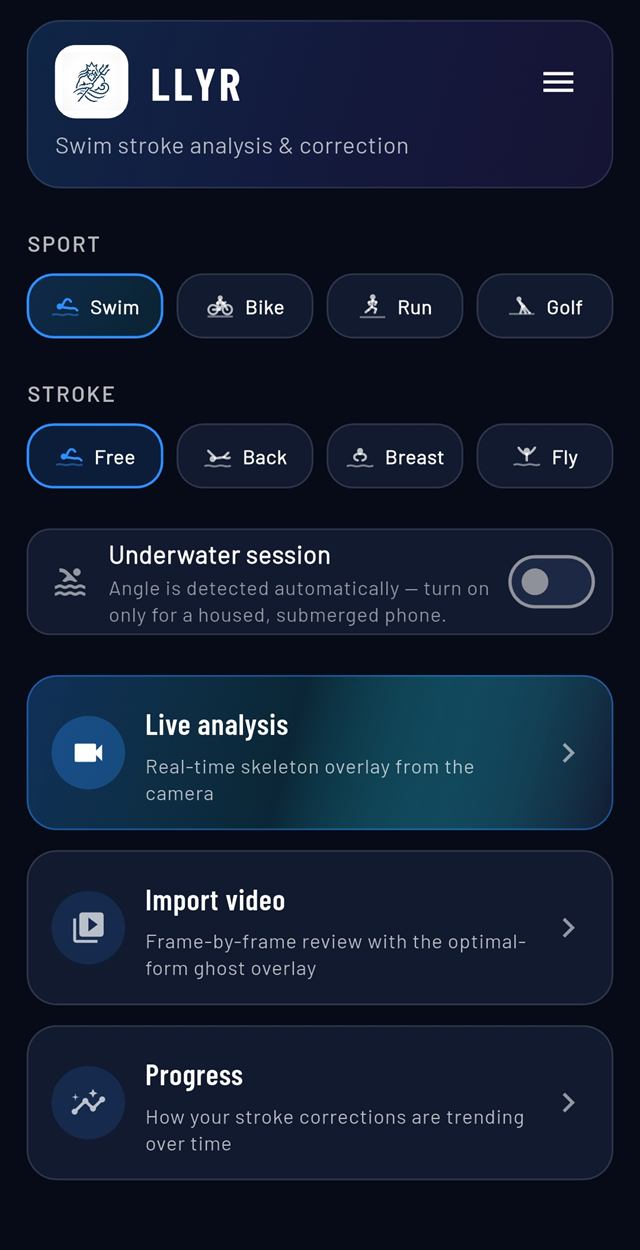
Llyr's home screen: Swim, Bike, Run and Golf across the top, the four swim strokes underneath, and Live analysis, Import video and Progress below that.

Swim, bike, run and golf are all built, and they are all the same app. You pick the sport at the top; everything under it changes to match — and the posture read sits behind all of them.

Llyr is in early access, the list is open, and the first tester group is capped at a hundred people.

Take one of the hundred

See what you actually look like.

Join the early-access list. Tell us which sport you train and that's the only one we'll email you about.

100Seats in the first group

That is the whole of it. We would rather have a hundred people actually filming and telling us what broke than a list of ten thousand who never open it.

No spam. Just an email when there's something to try.

100 seatsIn the first group Get early access